Smart Strategies for Getting the Most from Roadside Assistance
Key Takeaways
- Thoroughly review your roadside assistance plan details for better decision-making in emergencies.
- When dealing with a breakdown, take essential safety steps to remain secure until help arrives.
- Provide accurate information about your situation for faster, more precise service.
- Stock your car with basic emergency items for self-reliance and comfort.
- Use dedicated apps and digital tools to enhance convenience and communication with providers.
Table of Contents
- Introduction
- Understand Your Coverage
- Prioritize Safety
- Accurate Reporting
- Essential Items to Keep in Your Vehicle
- Leverage Technology
- Financial Benefits of Roadside Assistance
- Eco-Friendly Practices in Roadside Assistance
- Conclusion
Introduction
Life on the road can be unpredictable, but a strong roadside assistance plan ensures that sudden vehicle issues do not derail your day. By fully understanding and strategically using your membership—such as the resources outlined at https://mwg.aaa.com/membership drivers can count on reliable help during breakdowns, lockouts, or other emergencies. Familiarizing yourself with your plan’s benefits allows you to transform an unexpected stall into a brief, manageable pause, all while maintaining safety and preserving your peace of mind.
Many drivers sign up for roadside assistance but never fully explore its benefits—or potential limitations—until a critical moment arises. Smart drivers take the time to review the details, plan for emergencies, and keep essential gear within reach. This proactive approach, combined with digital tools from leading membership providers, can save time and money and ensure support arrives swiftly when needed.
Understand Your Coverage
Knowing what your roadside assistance includes is the cornerstone of a confident response during car troubles. Plans may offer coverage for towing, fuel delivery, battery jumps, flat tire replacement, and lockout services. However, providers can differ in details such as towing distance limits, the number of service calls permitted annually, and exclusions (like specific vehicle types or off-road locations). Review your membership terms and contact customer service if anything is unclear. Familiarity with your plan’s fine print allows you to make quick, informed choices in stressful situations, rather than scrambling to understand restrictions during a roadside emergency.
Prioritize Safety
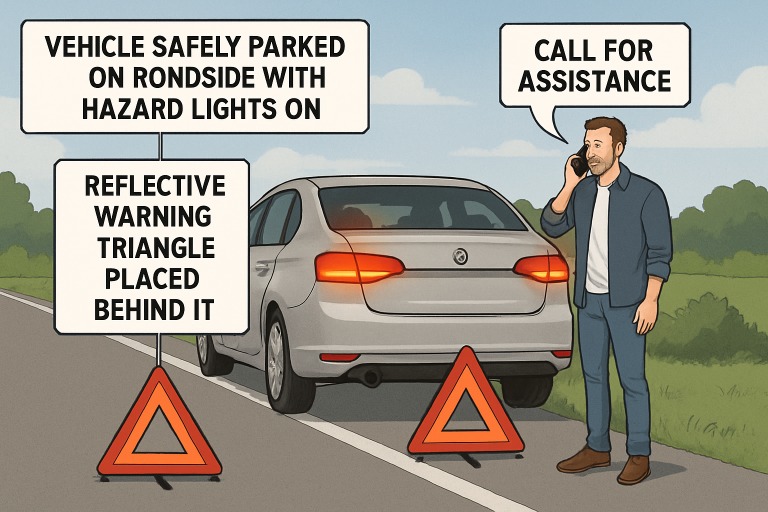
Your safety should be the top priority during any vehicle incident. Turn on your hazard lights to alert other drivers when an issue occurs. If your vehicle is mobile, carefully steer it out of traffic, onto the shoulder, or into a nearby parking lot. On a busy highway, remain inside your car with seatbelts fastened unless you’re in immediate danger, as exiting may expose you to passing vehicles. Place reflective triangles or flares a safe distance behind your car if it’s safe to do so. These simple measures substantially decrease the risk of secondary accidents and ensure you’re visible to responders and other motorists.
Accurate Reporting
Clear communication when requesting roadside assistance accelerates the arrival of help. When you call or use an app, be prepared to provide your GPS coordinates, the closest mile marker, or local landmarks to pinpoint your location. Clearly articulate your problem—for example, say “flat tire on the rear driver’s side,†rather than just “tire problem.†Share your vehicle’s make, model, color, and license plate so the provider can identify you upon arrival. The more information you offer upfront, the more efficiently your service can be dispatched, reducing your time spent on the vulnerable roadside. Precise location reporting is emphasized in resources from major publishers like Consumer Reports.
Essential Items to Keep in Your Vehicle
Preparedness can make a significant difference while you wait for help. Keep a kit in your car containing jumper cables, a properly inflated spare tire with a jack and tire iron, emergency triangles or flares, a flashlight with extra batteries, a comprehensive first aid kit, bottled water, non-perishable snacks, and a blanket or warm clothing. It’s also wise to have a portable phone charger, as your phone could be your lifeline during an emergency. These tools allow you to address minor issues, stay safe, and remain comfortable, helping to reduce stress until roadside assistance arrives.
Leverage Technology
Modern roadside assistance goes beyond a phone call. Many leading services offer mobile apps that allow users to request service, track the location of the incoming provider, and communicate directly with the driver en route. These features streamline the process, minimize guesswork, and provide real-time updates about estimated arrival times. Some apps even allow users to upload photos of their problem and receive step-by-step guidance while they wait. Utilizing these digital options, especially during inclement weather or at night, lets you stay connected and informed every step of the way.
Financial Benefits of Roadside Assistance
The investment in a roadside assistance plan can pay for itself quickly. Coverage typically includes tows, jump-starts, and unlocks that would otherwise cost much more out-of-pocket; some plans even provide trip interruption reimbursements or travel discounts. In addition, being enrolled in a recognized program may make you eligible for insurance discounts through participating carriers. According to Bankrate, proactively maintaining such memberships can translate into direct savings on travel and unexpected car expenses. This financial safety net is particularly valuable for commuters, road trippers, or families with multiple vehicles to cover.
Eco-Friendly Practices in Roadside Assistance
As sustainability becomes increasingly important, many providers make eco-conscious choices by introducing electric or hybrid service vehicles and sustainable supplies in their kits. By choosing plans prioritizing environmental stewardship, drivers contribute to a healthier planet while enjoying reliable support. Public awareness of green practices is rising, and these initiatives are gaining traction within the auto club industry and among independent service companies striving to lower their carbon footprint.
Conclusion
Maximizing the benefits of your roadside assistance plan goes beyond signing up. Strategic preparation—understanding your coverage, prioritizing safety, reporting issues precisely, maintaining emergency supplies, and using the latest technology—ensures you’re ready for the unexpected. Financial savings and eco-friendly opportunities further expand the value of membership. Whether it’s a flat tire, empty tank, or unforeseen breakdown, the right approach will enable you to travel with confidence, knowing help is always within reach.